


.jpg)
Winter has arrived. While the colder temperatures and fresh snowfall can be beautiful, they can also bring hidden risks for your home.
One hidden risk that can arise during winter is the formation of ice dams. Ice dams develop when snow sits on the roof and outdoor temperatures remain below 32°F, while the upper portions of the roof are warm enough to cause melting and the lower edges stay below freezing. As heat from inside the home rises into the attic, snow on the warmer areas of the roof begins to melt and flows downward until it reaches the colder lower sections, where it refreezes.
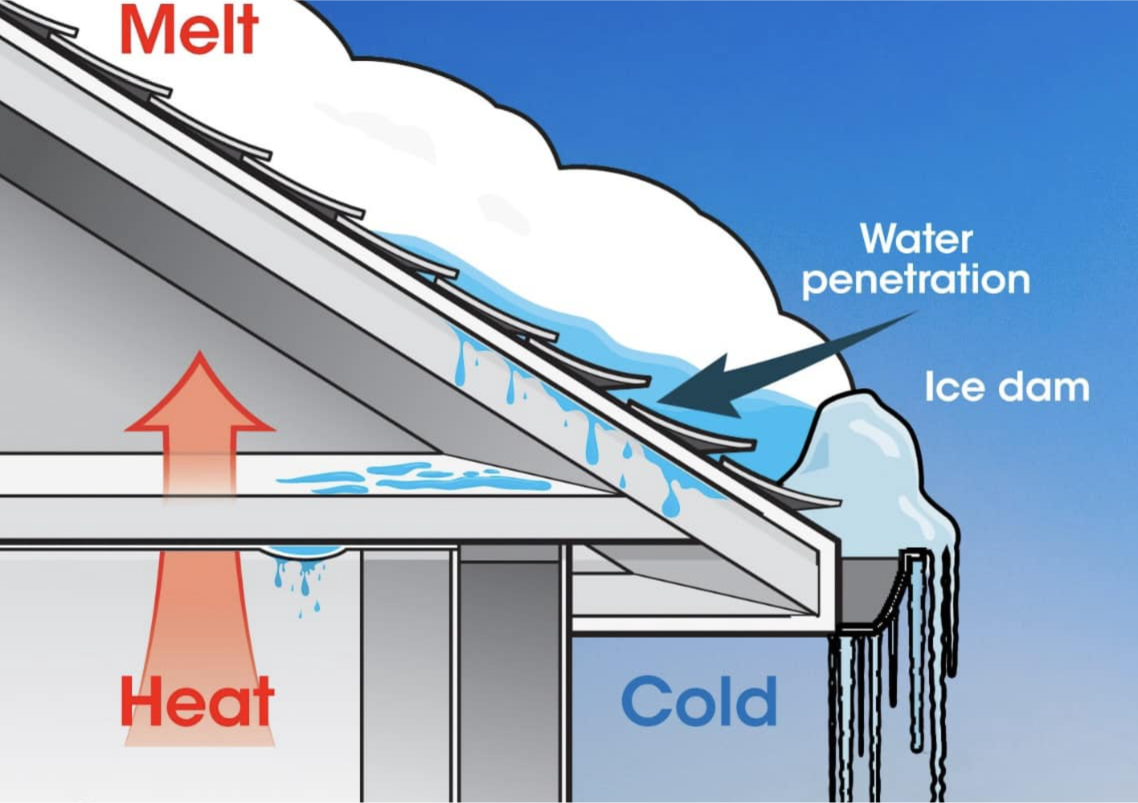
What Do I Do If There's Ice Dams On My Roof
1. Remove Snow from the Roof (If Safe):
If conditions are safe use a roof rake from the ground to pull snow off of lower 3–6 feet of the roof. Pulling snow off the roof will help reduce melting & refreezing at the eaves.
2. Create Melt Channels with Calcium Chloride:
A safe way to help relieve ice dams is by filling old socks or fabric tubes with calcium chloride, never use rock salt. Place them perpendicular across the ice dam to create channels which allows trapped water to drain off the roof.
3. Check Inside for Leaks:
First thing to look for is water stains on ceiling or wall. If water stains are present check for damp insulation in the attic. If there is active dripping, call a professional right away.
What NOT to Do…
Whatever you do, avoid chipping away ice with a hammer or shovel. Never pour hot water on the roof and definitely do not ignore it. Ice dams can force water under shingles and lead to significant damage to the surfaces below.
When to Call a Professional…
It’s important to call a professional if you are experiencing thick or widespread ice jams, have interior leaks, or if you have a historic or older home. Professionals will be able to inspect for any hidden damage as well as steam off any ice dams you have safely and recommend permanent fixes.
When it comes to long term solutions, there are several thing one can do to help prevent ice dams. One of the most impactful improvements is upgrading attic insulation. This helps keep heat from escaping and melting snow unevenly. It’s also important to make sure your attic is properly sealed. Sealing gaps that may be around lights, vents, chimneys and attic hatches. Increase ventilation by making your soffit and ridge ventilation balanced it will help keep roof temperatures consistent. Additionally, upgrading your gutters and drainage will help in ensuring your gutters are clean and properly sloped, allowing the melted snow escape.


